The Definitive Guide to Guitar Learning Software (No Distractions)
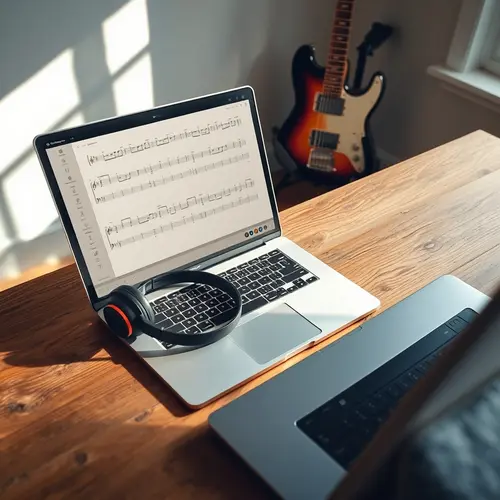
guitar learning software
Table of Contents
What separates a practice tool that becomes a core part of your guitar journey from one that gathers digital dust? The answer lies not in flashy marketing, but in understanding how effective guitar learning software aligns with the fundamental mechanics of acquiring a musical skill.
Modern learning platforms promise fast results. Yet the most effective software builds its methodology on established principles of motor skill acquisition and auditory training, not just song libraries. The core question for any guitarist is whether a program provides structured feedback, isolates weaknesses, and creates a sustainable practice loop.
How Guitar Learning Software Actually Teaches
Behind every interactive fretboard and scrolling tablature is a pedagogical engine. High-quality guitar learning software functions on three interconnected layers: visual guidance, auditory analysis, and kinesthetic feedback.
The visual layer translates musical concepts into fretboard diagrams and rhythmic notation. The auditory engine listens to your playing in real-time, comparing pitch and timing against a reference. The kinesthetic component is the software’s ability to break down complex movements into repeatable, isolated drills. When these layers work in concert, they create a closed-loop system for improvement.
The Feedback Imperative: Guitar Learning Software Beyond Just “Right or Wrong”
A common weakness in beginner-focused tools is binary pass/fail feedback. Advanced platforms provide granular analysis. They might highlight that your bend was 15 cents flat, or that your picking hand anticipation caused a rhythmic rush. This specificity, often informed by research from institutions like the Royal College of Music on instrumental pedagogy, transforms practice from guesswork into targeted calibration.
According to a consensus view published in the Journal of Music Theory Pedagogy, the most significant gains occur when software isolates a single element of technique—like alternate picking synchronization—and provides metrics for incremental progress. This moves you beyond merely playing along.
| Software Function | Beginner Priority | Intermediate/Advanced Priority |
|---|---|---|
| Real-Time Pitch Detection | High (Tuning, Basic Note Accuracy) | Medium (Focused on Intonation & Bends) |
| Rhythmic Subdivision Analysis | Medium (Keeping Steady Time) | High (Syncopation, Polyrhythms) |
| Custom Exercise Generator | Low (Follows Preset Path) | Critical (Addresses Personal Gaps) |
| Tone & Articulation Feedback | Very Low | High (Muting, Dynamics, Expression) |
A Contrarian View: The Myth of the Guitar Learning Software “All-in-One” Solution
Industry marketing often pushes the idea of a single, universal guitar learning software that serves a complete novice and a seasoned session player equally well. This is a pedagogical fantasy. The cognitive load and skill focus required at different stages are too divergent.
A true expert approach involves strategic software stacking. You might use one platform for its exceptional sight-reading drills, another for its deep dive into a specific genre’s phrasing, and a dedicated audio plugin for tone shaping. The goal is to curate a toolkit, not find a monolithic solution. The best guitarists use software as a specialized assistant, not a replacement for directed, intentional practice.
Consider a hypothetical troubleshooting scenario: A player can play scales quickly but their phrasing feels robotic. A generic practice app might suggest “play with more feeling.” An expert-curated software stack would approach it differently. One tool would analyze and visualize their timing deviations from a swung feel. Another would generate call-and-response phrases based on a selected blues vocabulary. A third might mute certain notes in a backing track to force creative note choice. This is software serving the art.
Selecting Your Foundation: A Practical Guitar Learning Software Checklist
Before committing to a subscription or purchase, evaluate a platform against this core checklist. These are the non-negotiable features that signal serious educational design.
- Does it offer variable speed practice WITHOUT changing pitch? This is the single most important tool for mastering difficult passages.
- Can you loop specific, user-defined sections? Look for the ability to set loop points down to a single beat.
- Is the notation/tab display customizable? Can you hide certain notation elements to reduce cognitive load?
- Does it provide historical progress tracking? Simple gamification is useless. You need charts showing accuracy and tempo trends over weeks.
- Can it generate exercises from your own mistakes? The best software identifies your weak spots and creates drills to target them directly.
The Evergreen Value of Core Mechanics
While specific app interfaces change, the underlying principles of effective practice are timeless. The right guitar learning software should feel like a diligent, objective coach. It should celebrate micro-wins—like a 2% improvement in your legato consistency—and ruthlessly identify the single note in a run that consistently lags.
This focus on measurable fundamentals ensures your investment pays dividends for years, regardless of software updates. You’re building neural pathways and muscle memory, not just learning to navigate a particular app’s menu system.
Ultimately, the most powerful tool is the one that fades into the background. You stop thinking about the software and start thinking about the music. The interface becomes intuitive, the feedback immediate and actionable, and your practice sessions become denser with productive work. That is the hallmark of a well-designed learning platform.
Choosing your guitar learning software is therefore a critical foundational decision. It sets the structure for your entire development path. Prioritize depth of feedback and adaptable practice tools over sheer volume of content. The goal is not to have more songs to play, but to play the songs you love with more clarity, feel, and technical command.
Sherina Arabella is a senior music education specialist at DB Music Academy covering guitar, vocals, and learning psychology. 6+ years, 120+ guides. Method: conservatory methodology and motor-learning research. Author of 2,082 music guides since 2022.