Experience Powerful Learning: The Joyful Music Theory Methods Revolutionizing Young Artists
Table of Contents
Every parent dreams of watching their child flourish—glowing with confidence, ignited by inspiration, and empowered by skills that carry them far into the future. Today, young artists all around the world are experiencing a breathtaking transformation thanks to innovative approaches to music theory that extend far beyond the traditional textbook model. These joyful, immersive, and intelligently designed methods are gently reshaping how children understand sound, emotion, structure, and artistic expression. And the results are astonishing.
Some children are discovering rhythm through gamified digital platforms. Others are mastering harmony using storytelling-based lessons that turn complex concepts into vivid narratives. Still more are progressing at lightning speed through hybrid models blending visual cues, sensory engagement, and explorative creativity. Compared to older systems—rigid drills, memorization, dry notation practice—these approaches feel like stepping into a radiant world of imagination. A world where music theory isn’t just learned; it’s lived.
How Dynamic Music Theory Approaches Spark Instant Interest
A child’s attention is a fragile flame. When nurtured with vibrant methods—interactive exercises, rhythmic puzzles, color-coded notation—it ignites into a steady, glowing fire of curiosity. Newer music theory models tap into that spark with intention. Programs like flow-based rhythm coaching, tonal mapping games, and improvisation prompts help young learners connect emotionally with musical patterns. While traditional lessons may offer structure, modern methods offer engagement. And engagement is the bridge between learning and loving.
In these programs, a simple chord progression becomes an adventure. A scale becomes a treasure map. A rhythm becomes a puzzle waiting to be solved. Compared to conventional lessons that often feel linear and rigid, contemporary platforms adapt to a child’s pace—nurturing both slower learners and fast-paced thinkers with equal grace.
Why Parents Desire These Joyful Music Theory Methods
Parents today seek more than competence—they crave confidence, creativity, and emotional intelligence for their children. Modern music theory approaches deliver exactly that. By weaving fun into foundation-building, they reduce frustration, increase retention, and create a learning environment where children feel safe to experiment.
Imagine two children learning the same concept. One studies traditional notation drills, focusing on repetitive practice. The other participates in a scenario-based lesson where the notes become characters in a story, each with a special role in the musical world. Both learn—but only one walks away inspired. Only one feels empowered. Only one is excited for the next lesson.
This is the true power of joyful, modern music theory instruction: it inspires. It builds musical fluency in a way that resonates emotionally as much as intellectually.
Actionable Pathways to Unlock Transformational Music Theory Learning
Parents who want to elevate their child’s artistic journey now have access to an impressive variety of high-impact music theory programs designed with development, happiness, and long-term growth in mind. Whether choosing a digital course with gamification, a live instructor specializing in creative pedagogy, or a hybrid platform blending interactive technology with classical grounding, there is a path suited for every young learner.
These options don’t compete with one another—they complement. Gamified platforms make foundational concepts fun. Live instructors build connection and emotional trust. Hybrid programs merge the best of both worlds. Choosing the right approach is about matching a child’s personality with the learning environment they’ll thrive in.
And as children begin absorbing music theory through methods that feel joyful rather than obligatory, their musical abilities grow exponentially—faster, stronger, and with deeper passion than ever before. They don’t just learn music. They become musicians.
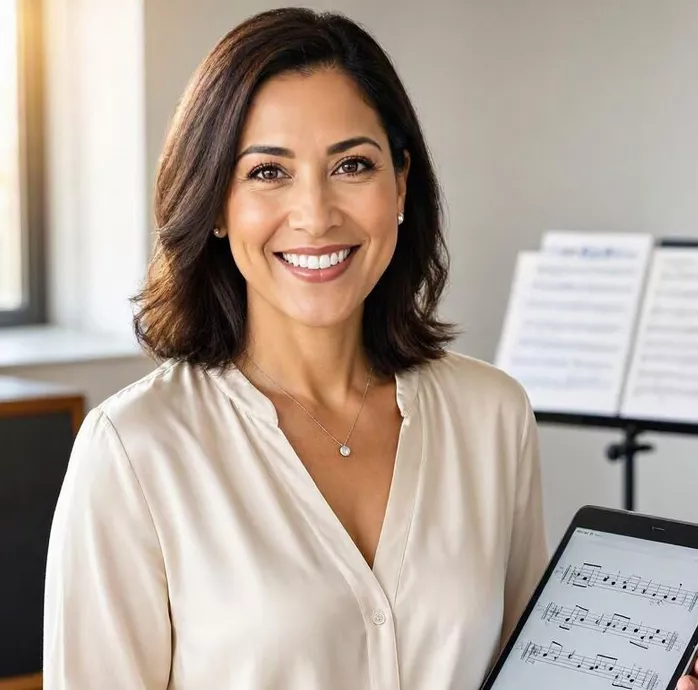
Sherina Arabella is a senior music education specialist at DB Music Academy, specializing in guitar pedagogy, vocal harmony technique, instrument selection science, and music learning psychology for US students and educators. She translates conservatory methodology, motor-learning research, and repertoire standards into actionable guides for beginners, teachers, and self-learners. Coverage: guitar chord fundamentals, learning methodology comparison, harmony vocal arranging, instrument selection…