Guitar for Learning: 7 Factors to Pick Your First Guitar
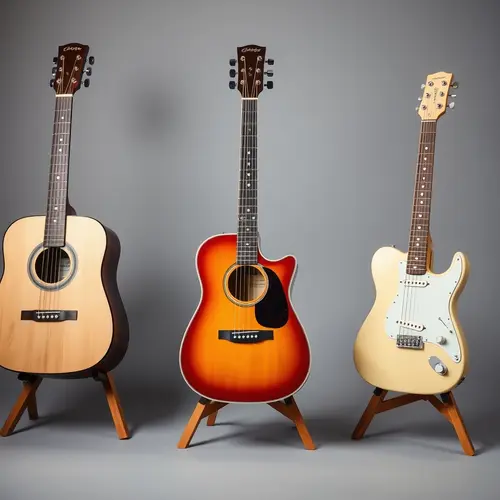
Table of Contents
Why Your First Guitar for Learning Choice Matters
The physical relationship between a beginner and their instrument directly impacts skill development. According to research from the National Association of Music Merchants, nearly 90% of new guitar students quit within the first year, with instrument discomfort ranking as a primary factor. Cross-check measurements against an acoustic guitar buying guide before ordering online. A properly sized guitar with appropriate string tension allows beginners to form chords without excessive hand fatigue. The action height—the distance between strings and fretboard—should measure no more than 3/32 inch at the 12th fret for steel strings. Higher action forces beginners to press harder, creating unnecessary muscle strain and sloppy technique. Acoustic guitars produce sound through body resonance, requiring no external equipment. Electric guitars need amplifiers but offer lower string tension and narrower necks, making them physically easier to play for extended practice sessions.Body Size and Neck Dimensions
Full-size dreadnought acoustic guitars measure 20 inches in body length with a 25.5-inch scale length. This standard size overwhelms players under 5’2″ or those with smaller hands. A 3/4-size guitar or parlor-style body provides better ergonomics for petite beginners without sacrificing sound quality. Neck width at the nut varies between 1.65 inches (classical) and 1.69 inches (acoustic). Classical guitars use wider necks to accommodate nylon strings and fingerstyle playing. Beginners focusing on strummed chords benefit from the narrower necks found on steel-string acoustics or electric guitars. The neck profile—whether C-shaped, V-shaped, or U-shaped—affects hand positioning and comfort. C-shaped profiles offer the most versatility for beginners still developing their grip preferences.Electric vs. Acoustic: The Technical Reality
Electric guitars use lighter gauge strings (.009-.042 inch for super light sets) compared to acoustic steel strings (.012-.053 inch for light gauge). This difference translates to roughly 40% less finger pressure needed to fret notes cleanly. The tradeoff involves equipment requirements. A functional electric guitar setup requires the instrument, amplifier, instrument cable, and tuner—typically $400-600 for entry-level quality. An acoustic guitar for learning needs only the instrument and tuner, reducing initial investment to $200-400. Solid-body electric guitars weigh 6-9 pounds, while acoustic dreadnoughts weigh 4-6 pounds. Despite the weight difference, acoustic guitars require more physical effort per note due to higher string tension and the pressure needed to generate volume.String Material and Maintenance Demands
Nylon strings on classical guitars exert approximately 85 pounds of tension on the neck. Steel strings generate 160-200 pounds of tension. This mechanical stress requires truss rod adjustments as humidity changes throughout the year. Coated strings from manufacturers like Elixir or D’Addario extend lifespan by 3-5x compared to uncoated strings. The phosphor bronze coating prevents oxidation from finger oils and sweat, maintaining tone clarity for 3-4 months versus 3-4 weeks for standard strings. String gauge directly correlates with playability. Light gauge acoustic strings (.012-.053) balance tone production with finger comfort. Medium gauge strings (.013-.056) produce fuller tone but increase the force required for bending and fretting by approximately 25%.Construction Quality Indicators
Laminate wood construction uses thin wood veneers pressed together, creating durable instruments that resist humidity damage. Solid wood tops produce richer harmonics and improve with age as the wood resonates more freely over time. Entry-level guitars should feature solid tops with laminate back and sides—a construction method balancing tonal quality with affordability. Fully laminate guitars under $150 typically suffer from dead tone and poor intonation past the 7th fret. Tuning machines with at least 14:1 gear ratios provide stable tuning. Lower ratios cause tuning instability, forcing constant retuning that interrupts practice flow and builds frustration.Common Myths About Guitar for Learning Selection
The widespread belief that beginners should start with cheap guitars to “see if they stick with it” backfires consistently. Poorly constructed instruments with sharp fret ends, high action, and unstable tuning create artificial difficulty unrelated to actual playing skill. Another persistent myth claims classical guitars suit beginners best because nylon strings feel softer. While nylon strings do reduce initial finger soreness, the wider neck spacing (2 inches at the nut) makes chord transitions more challenging for players with average-sized hands. The notion that acoustic skills transfer seamlessly to electric playing oversimplifies the technical differences. Acoustic playing develops right-hand attack strength, while electric playing requires precise left-hand muting and cleaner articulation due to amplification revealing every technical flaw.Practical Feature Checklist
A quality guitar for learning incorporates specific measurable features that facilitate skill development:- Action height at 12th fret: 2.5mm (bass strings) and 2.0mm (treble strings) for acoustics
- Nut slots filed to proper depth, allowing string height of 0.5mm above first fret
- Frets leveled and polished, with no sharp edges protruding from fretboard sides
- Truss rod accessible for seasonal adjustments without removing the neck
- Intonation accuracy within 5 cents at the 12th fret (verified with chromatic tuner)
- Tuning machines maintaining pitch through 30 minutes of playing without drift
- Finish quality without runs, drips, or uneven coating that indicates poor quality control
Price-to-Quality Relationship
Manufacturing precision directly correlates with price points in predictable ways. Guitars under $200 typically feature inconsistent fretwork, poorly filed nut slots, and necks requiring immediate setup adjustments. The $300-500 range represents the entry point for instruments with reliable intonation and playable action straight from the factory. Brands like Yamaha, Ibanez, and Epiphone maintain consistent quality control in this bracket through automated CNC manufacturing processes. Spending beyond $600 for a first guitar for learning offers diminishing returns for beginners who haven’t developed the technique to appreciate tonal nuances. That budget surplus serves better spent on lessons or a quality digital tuner.Setup Specifications Comparison
| Specification | Acoustic Steel-String | Classical Nylon | Electric |
|---|---|---|---|
| Action at 12th Fret | 2.5mm/2.0mm | 3.5mm/3.0mm | 1.8mm/1.5mm |
| Neck Width at Nut | 1.69 inches | 2.0 inches | 1.65 inches |
| String Tension | 165 lbs | 85 lbs | 120 lbs |
| Scale Length | 25.5 inches | 25.6 inches | 24.75-25.5 inches |
| Typical Weight | 4-6 lbs | 3-5 lbs | 6-9 lbs |
Expert Troubleshooting Insight
Most early pain traces back to the first guitar for learning setup, not talent. When a student reports difficulty forming barre chords within their first three months, the issue rarely stems from lack of hand strength. Measuring the action at the first fret typically reveals improper nut slot depth, forcing excessive pressure to achieve clean notes. Professional setup involves filing nut slots to precise depths using specialized gauged files. A properly cut nut allows strings to sit barely above the first fret—approximately 0.020 inches—eliminating the need for excessive thumb pressure when forming chords. This setup detail gets overlooked on factory guitars, even in the $400-600 range. Investing $50-75 in professional setup transforms a mediocre playing experience into a properly functioning instrument that supports rather than hinders skill development. Once the setup is dialed, work through Learning Basic Guitar: 7 Proven Steps to build clean chords on it.Matching Guitar Type to Musical Goals
Aspiring folk, country, or singer-songwriter players benefit from acoustic steel-string guitars that develop right-hand dynamics and projection techniques. The immediate acoustic feedback teaches volume control and pick attack without electronic processing. Students targeting rock, metal, or blues styles should prioritize electric guitars. These genres rely heavily on amplifier distortion, effects pedals, and sustain characteristics impossible to achieve on acoustic instruments. Match the instrument to the songs you love: the best guitar for learning is the one you reach for daily. Compare study paths in these proven guitar-learning methods before committing to lessons. Classical and flamenco students require nylon-string guitars with the wider neck spacing necessary for complex fingerstyle patterns. The softer nylon strings facilitate rapid scale work and tremolo techniques without excessive finger fatigue.Final Considerations for Your First Instrument
The optimal guitar for learning balances physical comfort, tonal quality, and setup precision at a price point that doesn’t require significant financial commitment before confirming long-term interest. Focus on instruments from established manufacturers with consistent quality control rather than chasing exotic tone woods or premium features that exceed beginner skill levels. Purchase from retailers offering 30-day return policies and free setup services. Test the guitar for at least 20 minutes in-store, checking for smooth fret transitions, comfortable neck profiles, and stable tuning after vigorous strumming. The relationship between player and instrument develops through hundreds of practice hours. Starting with a properly sized, well-constructed guitar for learning establishes the technical foundation and physical comfort necessary to reach intermediate playing levels within 12-18 months of consistent practice.Related reading: Ultimate Guitar Self Learning Guide.
What size guitar for learning suits small hands?
A 3/4-size or parlor body with a 24-inch scale fits most petite players. Check that you can fret the first three frets without fully extending your wrist.
How much should a first guitar cost?
Plan 300 to 500 dollars for solid-top instruments with stable tuning. Spending more on a first guitar for learning buys little until your technique can hear the difference.
Is a setup really necessary for beginners?
Yes. A 50-dollar setup fixing nut depth and action helps more than any upgrade, and a well-adjusted guitar for learning keeps practice painless from week one.

Sherina Arabella is a senior music education specialist at DB Music Academy covering guitar, vocals, and learning psychology. 6+ years, 120+ guides. Method: conservatory methodology and motor-learning research. Author of 2,082 music guides since 2022.