Learning Basic Guitar Chords Fast: 7-Step Practice Plan

Table of Contents
Choosing the Right Instrument for learning basic guitar
The guitar itself dictates your early success. A high action — the distance between strings and fretboard — forces beginners to press too hard, causing fatigue and buzzing notes. Aim for a setup with low action straight from the shop. According to repair technicians at major retailers like Guitar Center and Sweetwater, a professional setup costs $50–$80 and transforms a frustrating plank into a playable tool. If you have not bought one yet, compare body sizes and string options in our guitar for learning checklist before you spend.Acoustic vs Electric: What Suits Your Style for learning basic guitar
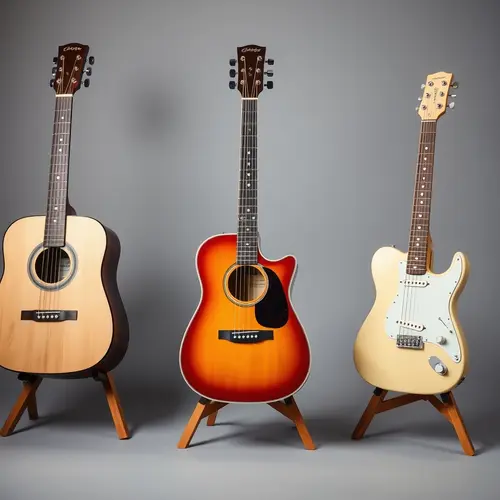
Acoustics build finger strength faster due to heavier gauge strings and higher tension. Electrics offer lower tension and thinner necks, reducing physical barrier to entry. If your goal is singer-songwriter material, start acoustic. If you want rock, blues, or lead lines, electric lowers the quit rate. The National Association of Music Merchants (NAMM) data consistently shows electric starters retain lessons longer in the first six months; pair that with free beginner chord lessons for daily drills.Essential Gear Checklist
- Clip-on tuner: Non-negotiable. Train your ear against a reference pitch every session.
- Medium picks (0.73mm–0.88mm): Thin picks flap; thick picks catch. Medium offers control for strumming and single notes.
- Capo: Unlocks thousands of songs in open positions without barre chords.
- Strap: Practice standing up. Posture changes everything for wrist health.
- Metronome app: Time feel separates players from posers. Start at 60 BPM.
The 5 Non-Negotiable Techniques
Master these before attempting full songs. Skipping fundamentals creates “swiss cheese” technique — holes that collapse under pressure.| Technique | Focus Point | Common Fault |
|---|---|---|
| Fretting Hand Position | Thumb behind neck, fingertips vertical | Thumb over neck “baseball grip” |
| Pick Angle | Slight bevel, wrist relaxed | Death grip, digging into strings |
| Chord Transitions | Move fingers as a unit, not individually | Lifting hand off fretboard completely |
| String Muting | Palm mute for rhythm, fingertip mute for clarity | Unwanted open strings ringing |
| Alternate Picking | Strict down-up motion | Economy picking by accident |
Building a Practice Routine That Sticks
Consistency beats intensity. Ten minutes daily beats two hours on Sunday. Structure every session: two minutes tuning and chromatics, five minutes chord changes (G–C–D–Em loop), three minutes rhythm strumming with a metronome. The Journal of Research in Music Education highlights that distributed practice schedules accelerate motor skill retention significantly compared to massed practice. Track tempo in a notebook. If you cannot play it clean at 60 BPM, you do not know it. For a full comparison of self-study paths, see these proven guitar-learning methods and build your 90-day plan.Common Myths Debunked
Myth: “You must learn music theory first.” Reality: Theory explains what you already play. Learn the shapes for G, C, D, Em, Am first. Make music immediately. Theory connects the dots later. Myth: “Barre chords are the gateway to real playing.” Reality: Barre chords are a specific tool, not a graduation requirement. The CAGED system unlocks the neck using open shapes moved up with a capo or index finger. Many pros avoid full six-string barres for decades, preferring triads and partial shapes for better voice leading.Troubleshooting Fretting Hand Pain
A student last month developed sharp pain at the base of the thumb — classic thenar eminence strain. Diagnosis: pressing with the pad of the thumb instead of the side, combined with a wrist bent past 30 degrees. Fix: lower the strap so the neck angles up 45 degrees. This straightens the wrist. Per NIH guidelines on repetitive strain injury, frequent micro-breaks (30 seconds every 10 minutes) reduce inflammation risk more than one long break. Stop immediately if pain shoots; soreness is normal, nerve pain is not. Your first 100 hours of learning basic guitar define your ceiling. Protect your hands, trust the metronome, and play songs you actually enjoy. The gear matters less than the discipline.How to Track Progress Without Burning Out
Progress during learning basic guitar practice is invisible day to day, so log it. Buy a paper notebook and record three numbers after every session: minutes played, fastest clean tempo on your G-C-D-Em loop, and how many chord changes you completed without buzzing. Review the log every Sunday. When the numbers stall for two weeks, change one variable only, such as pick thickness or thumb position, then watch the next week of entries. Climb the tempo ladder in 4 BPM steps. Start each loop at 60 BPM and play it five times without error before moving up. If buzzing returns at the new speed, drop back down and finish the session there. Speed built on sloppy repetitions collapses on stage, while slow clean repetitions transfer to any tempo. Record a 60-second phone video every Friday and compare hand positions month over month; the camera catches a collapsing wrist faster than a mirror. Use this weekly checklist to keep learning basic guitar sessions honest:- Tune first: clip-on tuner on, reference pitch matched, fine-tune the B string twice.
- Chromatics: two minutes of 1-2-3-4 fretting drills with strict alternate picking.
- Chord loop: five minutes of G-C-D-Em changes against the metronome, counting clean repetitions.
- Song reward: finish with one full song you love, strummed simply, to protect motivation.
String changes and setup checks belong on the calendar, not on the to-do list you postpone. When action creeps up with seasonal humidity shifts, a ten-minute truss-rod and saddle check at the shop restores the easy feel your hands remember.
How long does it take to play clean open chords?
Most beginners play clean open chords within 4 to 6 weeks of daily 10-minute sessions. During learning basic guitar practice, raise metronome speed only when every note rings clear at 60 BPM, and log your fastest clean tempo weekly.
Should I start on acoustic or electric?
Pick the one you will play daily. Electrics are gentler on fingers, acoustics build strength faster, and when learning basic guitar either path works if the shop setup keeps action low. Test both neck shapes before buying.
Why do my chords buzz even when I press hard?
Buzzing comes from fingertip placement, not force. Fret close behind the wire with vertical fingertips, keep the thumb behind the neck, and ask the shop to lower high action. Practice learning basic guitar songs slowly: ease off pressure until the buzz returns, then add just enough to clear it.

Sherina Arabella is a senior music education specialist at DB Music Academy, specializing in guitar pedagogy, vocal harmony technique, instrument selection science, and music learning psychology for US students and educators. She translates conservatory methodology, motor-learning research, and repertoire standards into actionable guides for beginners, teachers, and self-learners. Coverage: guitar chord fundamentals, learning methodology comparison, harmony vocal arranging, instrument selection…